
You built the product.Now build the business.
Where will customers come from? Why do others leave? Which features will strengthen the business? Who is the strongest customer? What should it cost? Can the current codebase support the next stage? How should the product be explained? Why do some users register but never become active? Should you hire, rebuild, refactor or advertise?
Building the product and building the business are two different jobs. UNQRN helps you connect them.
The three Diagnostics


Not just findings.
A way forward.
Every Diagnostic opens with a Founder Scorecard: each area scored for maturity and risk against where your company actually is, not a benchmark you never asked for.
Critical
High Priority
Development Opportunities
Not Now
Missing evidence is never treated as proof that an area is healthy.
Choose the part of the company you need to understand. Or connect all of it.
- €690
Growth & Business
Build the commercial system.
You leave with a clearer commercial direction and a prioritised 90-day growth roadmap.
- €790
Technology & Architecture
Understand the technical reality.
You leave with a clear technical risk profile and a prioritised roadmap.
- Flagship€1,190
Full Founder
Connect the whole company.
You leave with one complete view of the company and the correct sequence for the next 90 days.



A decision made in one half of the company is paid for in the other.

A marketing plan can fail because the product does not deliver the promise. A product roadmap can fail because it is not connected to a commercial priority. A technical rebuild can consume months without improving the customer experience or business model. A growth campaign can create more users while making an unstable product more expensive to support.
 Martin examines what the business is trying to become.
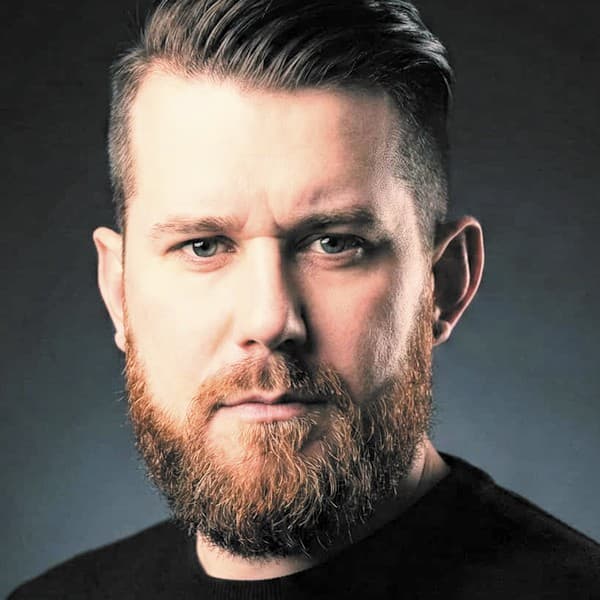 Sebastian examines what the technology can responsibly support.
Together, they build one sequence.
A structured process. No theatre.
One gate divides it: the founder kick-off. Before it, the pace is yours. After it, the clock is running and the dates are ours to hold.
- 01
Application
You tell us what you have built, what stage the company is at and which decision or constraint is creating the most pressure.
- 02
Qualification and scope
We confirm whether UNQRN Growth is the right fit and which Diagnostic is appropriate.
- 03
Agreement, NDA and payment
The scope is agreed before the work begins. Payment is made in advance.
- 04
Data room and access
You provide the information required for the selected Diagnostic.
Read-only repository access is mandatory for the Technology & Architecture Diagnostic and the Full Founder Diagnostic.
- 05
Founder kick-off
We begin with a 60–90 minute working session focused on the current business, product, objectives, assumptions and constraints.
The clock starts at the kick-off. Not at the contract.
Standard delivery is within five business days after the kick-off has been completed and all required information and access have been verified.
The delivery period does not begin while the data or access is incomplete.
A fast answer built on incomplete evidence is not useful to you.
- 06
Analysis
Martin leads the business, product and growth analysis. Sebastian leads the technology and architecture analysis where applicable.
- 07
Integrated synthesis
For the Full Founder Diagnostic, the commercial and technical findings are combined into one operating view.
- 08
Final presentation
We meet for 60–90 minutes to present the findings, risks, priorities and roadmap.
- 09
Delivery and follow-up
You receive the written report and roadmap, followed by an approximately 30-minute follow-up after 14 days.
You do not need a perfect product.
You need a real one.
A Diagnostic is worth buying once a few things are already true. Most of what founders worry about is not among them.
- The companymay still be unstable.
- The codebasemay be imperfect.
- The positioningmay be unclear.
- The businessmay not yet be profitable.
- Y
- must hold
- N
- ends the conversation
- The product already exists as a functioning MVP.
- Early users, first customers, recurring revenue, pilots or another credible form of demand.
- Your direct participation, meaningful information and the necessary access.
- A willingness to challenge your current assumptions.
- A product that exists only as an idea, a mock-up or a pitch deck.
- A founder who wants validation more than clarity.
You have already done the brave part.You made the idea real.
Now the work changes. It becomes less about proving that the product can exist and more about building the company capable of supporting it.
You do not need to understand every commercial and technical detail alone. But you do need a clear view of what is true, what matters and what comes next.
You built the product. Now build the business.